

PVC Roofing
Mule-Hide · FiberTite · Johns Manville Certified
The strongest heat-welded seams in the single-ply category. Chemical and grease resistant by formulation. Built for restaurants, food processing, and demanding rooftop conditions across the Chicago Tri-State Area.
Serving the Chicagoland Tri-State AreaSingle-Ply Thermoplastic Built for Tough Conditions.
PVC (Polyvinyl Chloride) is a reinforced thermoplastic single-ply membrane. Chemically resistant to oils, grease, and industrial exhaust, making it the standard specification for restaurants, food processing, manufacturing, and any building with corrosive rooftop discharge.
A complete PVC system includes:
- PVC membrane: reinforced, 50-80 mil, white reflective surface
- Insulation: polyiso to hit R-30ci minimum per Chicago energy code
- Cover board: puncture and impact resistance under mechanical traffic
- Adhesives or fasteners: depending on attachment method
- Flashings and details: curbs, penetrations, grease-exhaust terminations
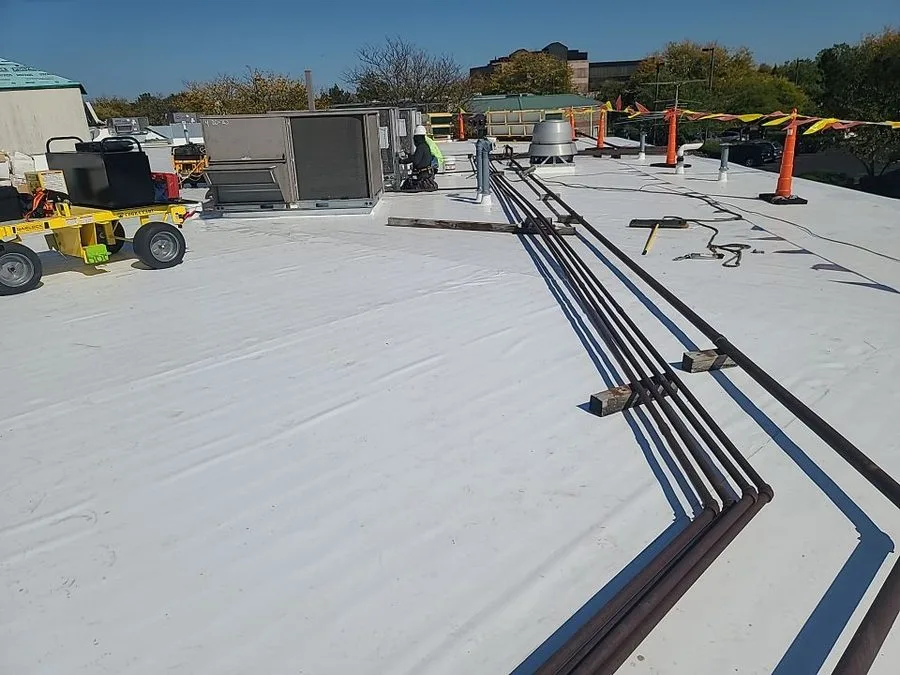
Three Ways to Attach a PVC Membrane
Method depends on wind uplift, substrate, and rooftop conditions. We walk through tradeoffs before the specification is locked.
Fully Adhered
Membrane bonded to the substrate with approved adhesives. Excellent wind uplift and a clean finished look. Common on buildings with chemical exposure or higher uplift requirements.
Mechanically Fastened
Fasteners and plates along seams with welded cover strips. Fastest install and most cost-effective. Strong wind performance when engineered correctly for the building.
RhinoBond Induction
Electromagnetic induction bonds membrane to coated fasteners without field penetrations. High wind uplift with fewer seams. Premium option for institutional work.
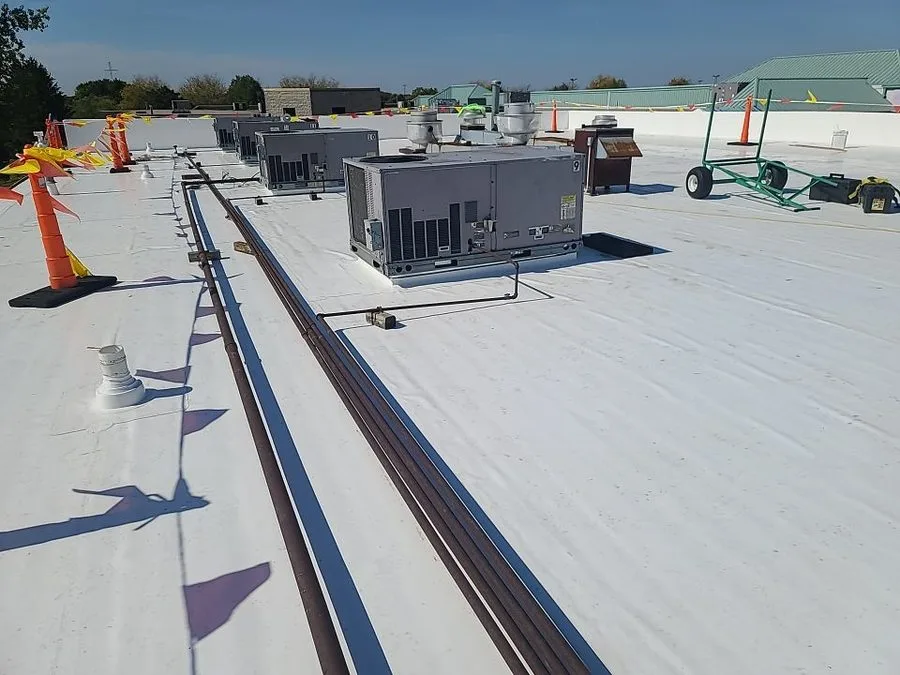
Why PVC Wins on Tough Roofs
- Chemical & grease resistance: by formulation, not surface treatment
- Ponding water tolerance: chemically inert to prolonged moisture
- Strongest welded seams: bonds stronger than the membrane itself
- Cool-roof reflective: meets Chicago Energy Code reflectance
- NDL-eligible: manufacturer warranties up to 30 years
When We Recommend PVC Over TPO or EPDM
PVC costs more upfront. For buildings that need it, the cost-per-year is lower and the seam performance is unmatched.
Active Certifications. NDL Warranty Eligible.
Factory-trained and certified to warrant every install.
Full NDL warranty authority on Mule-Hide PVC single-ply systems.
Certified on FiberTite KEE-based systems for institutional and industrial work.
Certified installer on JM PVC with Peak Advantage warranty options.
Frequently Asked Questions
Choose PVC when your building has rooftop chemical or grease exhaust (restaurants, food processing, manufacturing), chronic ponding water, or when you need the absolute strongest seam performance. For buildings without these conditions, TPO typically offers comparable performance at a lower cost-per-year.
A properly installed PVC roof typically lasts 20 to 30 years. PVC has the longest track record of any thermoplastic single-ply membrane, with installations exceeding 30 years still performing. NDL manufacturer warranties up to 30 years are available on certified installs.
Yes. PVC is chemically inert to standing water and does not degrade under prolonged moisture exposure. On roofs where perfect drainage cannot be achieved, PVC provides a meaningful margin of safety.
PVC typically has a higher material cost. For buildings that need chemical resistance or ponding tolerance, PVC's cost-per-year is often lower when you factor in reduced maintenance and longer effective service life. We model the comparison for your specific building before any decision.